A refrigerator that stops cooling almost always falls into one of a few patterns, and which pattern you have narrows the cause a long way.
Freezer cold, fridge warm
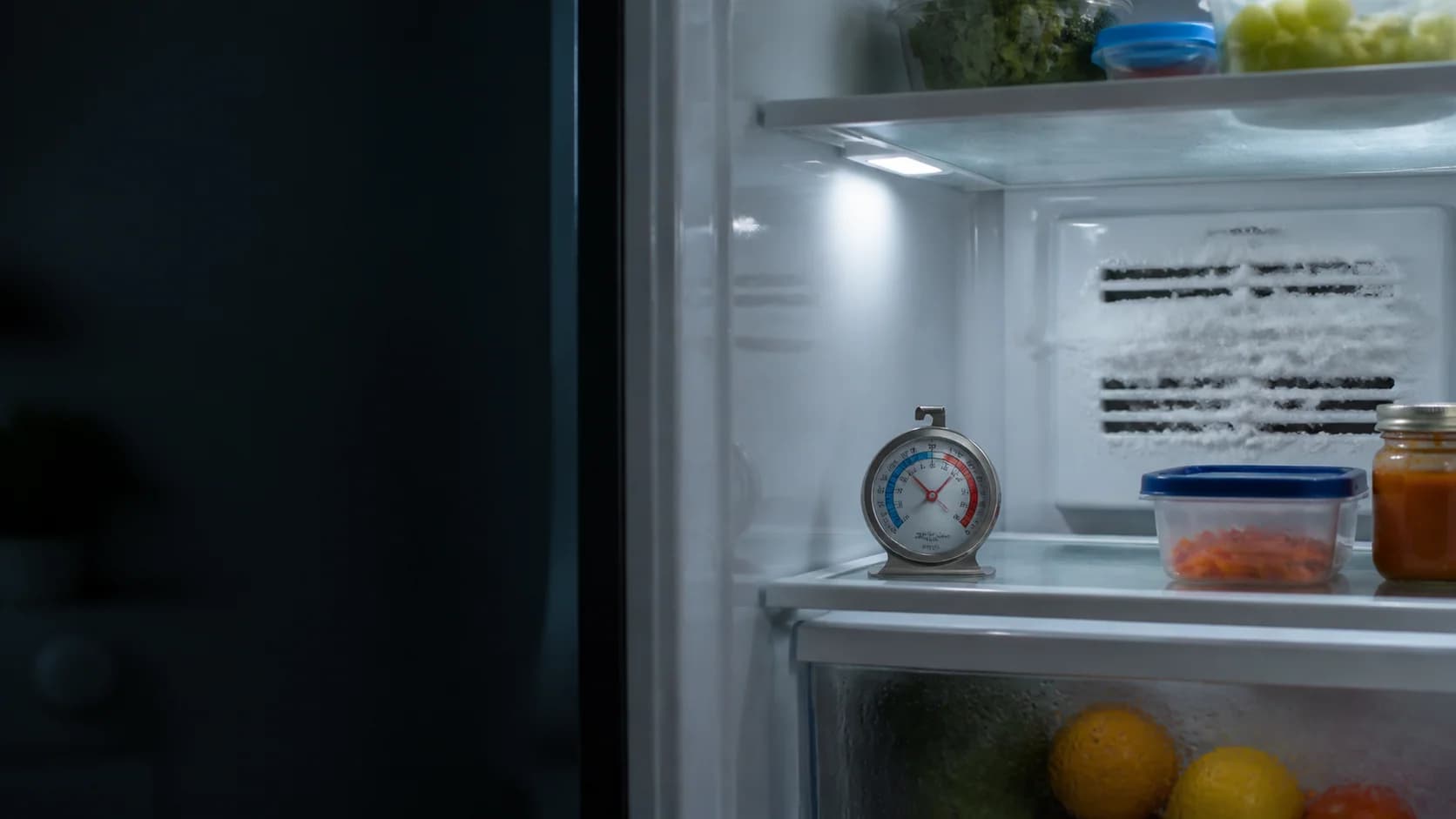
This is the most common version, and it usually means air is not moving rather than that cooling has failed. The cold is being made in the freezer and blown into the fridge compartment; if that airflow stops, one side stays cold and the other warms up.
The usual causes are a failed evaporator fan motor, or the evaporator coil icing over so completely that air cannot pass through it. A defrost system fault — heater, thermostat or timer — produces the same result more slowly, because frost builds up over days or weeks until it blocks the coil.
If you can hear a fan running in the freezer when the door switch is held in, airflow is probably not the problem. If it is silent, it often is.
Nothing is cold anywhere
When both compartments warm up together, the cooling itself has stopped. That points at the compressor circuit: a failed start relay, a failed compressor, or a loss of refrigerant. A sealed-system fault is not a DIY repair and is not always worth fixing on an older unit.
Before assuming the worst, check that the appliance actually has power and has not been knocked onto a tripped socket, and that the thermostat has not been turned down by accident.
Worth checking yourself
Two things are genuinely worth doing before calling anyone. Pull the unit out and look at the condenser coils underneath or behind — if they are packed with dust and pet hair, the appliance cannot shed heat, and cleaning them sometimes fixes the problem outright. Second, check the door seals: if a seal is torn or the door is not closing squarely, warm air is being pulled in continuously and no amount of cooling will keep up.
What is not worth doing
Do not remove interior panels to get at the coil, and do not try to melt ice with anything hot or sharp. There is live wiring behind those panels, and a punctured evaporator turns a repairable fault into a scrapped appliance.
Repair or replace
Airflow and defrost faults are usually worth repairing — they are common, the parts are not expensive, and the rest of the appliance is typically fine. Sealed-system failures on a unit over about ten years old are the point at which replacement deserves serious consideration.
Getting it looked at
This is general guidance, not a diagnosis. The same symptom can have a cheap cause or an expensive one, and the only way to know which is to have someone measure it. A technician will find the actual fault and give you a fixed price before any work starts, so you can decide with a real number rather than a guess.